
Hi-Hog Paddock Slab is a durable, porous ground reinforcement tile built for reliable performance in demanding conditions. It combines excellent drainage, high load-bearing strength, and an interlocking design to create a smooth, stable surface. While ideal for paddocks, it’s equally effective across a wide range of applications. Available by the pallet (156 pieces).

Paddock Slab Permeable ground stabilizing tiles
Equine facilities use Paddock Slabs as part of a superior footing solution. Cattle producers use Paddock Slabs to prevent mud around water stations, gates, handling facilities and high traffic areas. Landscapers use Paddock Slabs to create load bearing surfaces that are also permeable and guard against erosion.
loading class SLW 60 according to DIN 1072 with a max. wheel load of 100kN
e-mail Hi-Hog's Sales Department for pricing and shipping information

Hi-Hog #1336 Paddock Slab Technical Data Sheet
Equine Paddock Slab Applications Include:
Round Pens, Lunge Pens, Stable Entrances and Pathways, Dressage Arenas, Jumping Arenas and Riding Arenas
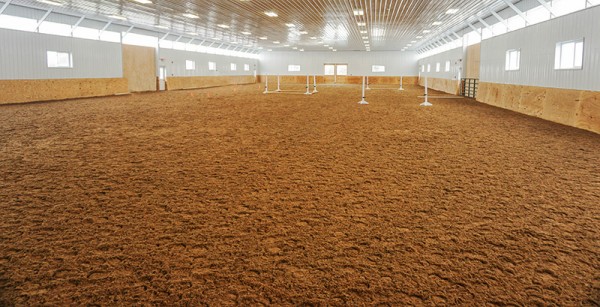
Level, Consistent Equine Arena Footing
Livestock uses for Paddock Slab include:
Paddocks, Loafing Pens, Working Areas, Feed Areas, Entrances and Gateways
Why Ground Conditions Matter:
- Dry, stable footing helps livestock move easily and maintain body condition, supporting better growth rates and more efficient feed use
- Well-drained surfaces reduce exposure to mud and moisture, helping lower the risk of disease, infection, and hoof-related issues
- Comfortable footing allows livestock to move naturally, helping reduce stress and support consistent growth and performance
- Cleaner conditions reduce ongoing labour, equipment wear, and the need for frequent ground repair in high-traffic areas

NOTE: Paddock Slab must be filled with some sort of sand, soil, pea gravel or clay.
1 yard of Pea Gravel will provide coverage for 120 pieces of Paddock Slab.
#1336 Paddock Slab can be ordered by the Pallet. (156 Paddock Slabs)
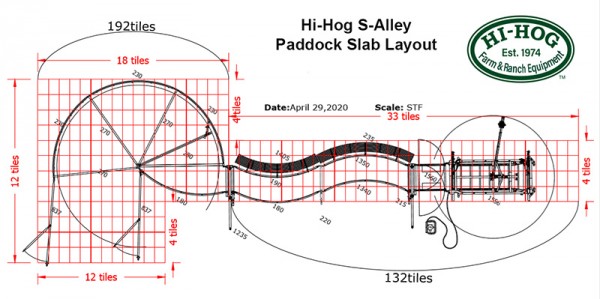
Curve Alley Handling System with Paddock Slab Layout
Livestock are very sensitive to their surrounding environment and stable footing is a big part of that. Paddock Slab will ensure that your livestock can move safely and confidently. This means faster handling and fewer opportunities for injury.
The grid is porous allowing rainwater and runoff to percolate through the grid and into the ground below. The helps maintain a dry and stable footing for your livestock and reduce the opportunity for injury or hoof disease.
The Paddock Slab tiles act like a snowshoe providing spectacular load carrying capacity so you can be confident driving over ground stabilized with Paddock Slab tiles.
Contact Hi-Hog to determine the correct amount of Paddock Slabs for you.
Landscape and Road Maintenance Uses Include:
Machinery Storage, Turn-around areas, Slope reinforcement, Parking Areas, Pathways and Hot Tub Foundations
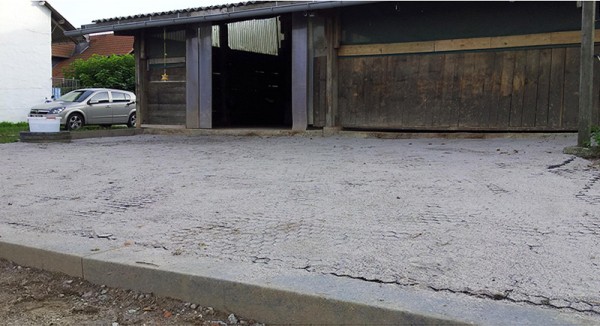
Built for Load-Bearing Performance
Paddock Slabs solve your footing challenges by providing outstanding support for both your animals and the footing material itself. Additionally, Paddock Slabs act as a barrier, separating your footing material layer from the foundation materials below. This ensures that your valuable footing materials are not prematurely contaminated with gravel and dirt.
The perforated Paddock Slab also allows for excellent drainage to ensure that your footing materials do not become waterlogged. And because Paddock Slab supports the vehicles, people and animals that traverse it, the foundation materials will remain uncompressed and porous allowing for continued superior drainage.
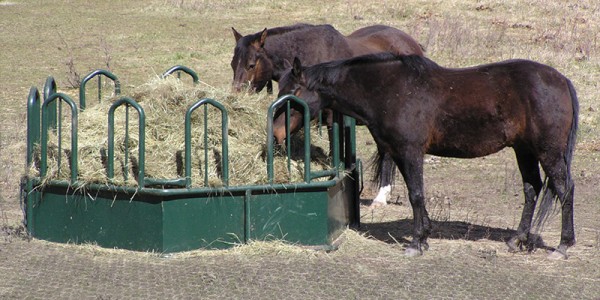
Dry, Stable Feeding Area with Paddock Slab
SUGGESTED EQUINE FOOTING BASE FOUNDATION BUILD-UP
Making a good footing foundation
A good base foundation will provide firm support and effective drainage. The depth of this base depends on what the arena will be used for and how much water the facility may need to absorb. the base should be graded so that water will not pool.
Firmness: While dressage events are good with a base of 4 to 6 inches in depth, jumping events need a deeper 12” base to provide a firm surface for the horses to generate power.
Drainage: Each of the three base layers, Paddock Slab, Stone Chips, and Gravel, are designed to provide both a firm consistent footing foundation and a porous substrate capable of shedding water from the arena. Recommend the use of 1 to 2” of sub-angular particles for the leveling layer as a good balance between stability and porosity.
Level: While the arena should have a slight grade of 1 to 2% to ensure proper drainage, it is important that the foundation is smooth and on the same plane.
If installed correctly the horse and rider can expect to enjoy consistent quality footing anywhere in the arena. This will result in increased confidence and performance while maintaining equine soundness.
Paddock slab installation methods for Equine Uses:
There are several methods of installing your Paddock Slab. Select your method based on your footing goals.
Simple Slab

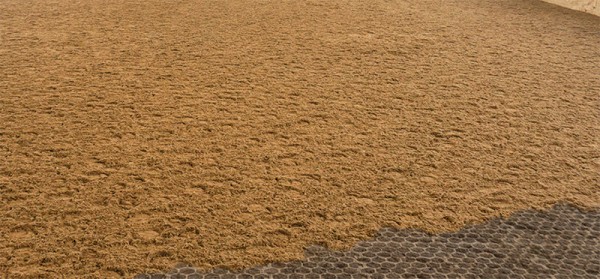
Arena Base with Ground Reinforcement Tiles
Professional Paddock Slab footing

This footing adds a 10 to 25 cm base layer of broken stone or gravel. The thicker this layer is, the better it will drain and ensure that your footing can be consistently maintained. The leveling layer above does not need to be as thick as described in the Horseman footing. The gravel layer can be roughly leveled as the leveling layer should provide the level that you require before installing the Paddock Slab.
NOTE: The size and shape of the particles being used will affect the ability of the resulting footing to provide traction and absorption. Round particles of a consistent size will offer little traction and will need to be deep to absorb the energy of the horse and rider. Sharp angular particles of a wide range of sizes will offer lots of traction but will compact quickly and not offer sufficient absorption. Sub-angular particles of similar size offer the best option.
Paddock Slab for cattle producers NOTE: Paddock Slab must be filled with some sort of sand, soil, pea gravel or clay. 1 yard of Pea Gravel will provide coverage of 120 pieces of Paddock Slab.
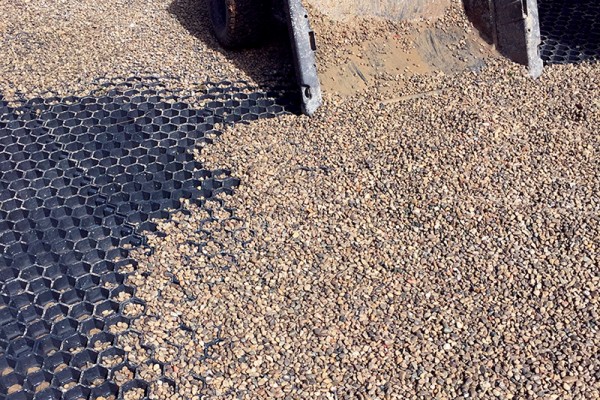
Pea Gravel Infill for Livestock Footing
The grid is porous allowing rainwater and runoff to percolate through the grid and into the ground below. The helps maintain a dry and stable footing for your livestock and reduce the opportunity for injury or hoof disease.
The Paddock Slab tiles act like a snowshoe providing spectacular load carrying capacity so you can be confident driving over ground stabilized with Paddock Slab tiles.
Contact Hi-Hog to determine the correct amount of Paddock Slabs for you.
Paddock Slab for Pathways, Driveways and Parking
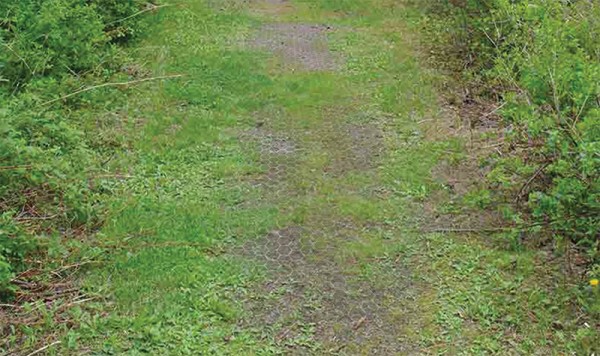
Natural Pathways with Hidden Strength
Traditional gravel drives however require regular maintenance including frequent grading and top dressing. If maintenance is not performed your gravel drive will soon deteriorate and rut.
Paddock Slab for trails and paths
Horse trails, ATV paths, Natural Parking Pads and most any natural route that sees a lot of traffic can fall prey to erosion, rutting and mud. Use paddock slab to offer support while also allowing superior drainage with minimal erosion damage
Porous Foundation Support
Landscapers use Paddock Slabs to create load bearing surfaces that are also permeable and guard against erosion. Paddock Slabs offer remarkable support. The grids act similarly to a pair of snowshoes in their ability to transfer loads over a large area. For this reason they offer a more affordable alternative to installing a concrete slab. Combine the paddock slab with a gravel base makes a great solution for supporting hot tubs and garden sheds. The porous nature helps to reduce rot.
loading class SLW 60 according to DIN 1072 with a max. wheel load of 100kN
Paddock Slab reinforces slopes and protects waterways.
- Paddock Slab reinforces the ground and prevents the excessive migration of fill materials
- Paddock Slab’s cellular structure holds fill materials while preventing the development of streams
- Paddock Slab provides a permeable surface to assist in ground water absorption
- Paddock Slab provides support and prevents wear and compression
Temporary Ground Stabilization & Protection
There are a wide range of temporary events where foot and vehicle traffic can quickly turn a pristine landscape into a muddy quagmire. Be prepared by installing Paddock Slab wherever you need to protect the landscape. This will keep your guests and participants happy and dry and will minimize costly repair efforts required at the close of your event.
If you’re hosting an event such as a wedding, family reunion, or farm tour, Paddock Slab can quickly be installed to protect both your guests and your property.
- Turn your lawn into a temporary parking lot
- Create a temporary path and keep your guests dry and your landscape protected
- Create pads for your guests to park their motor-homes
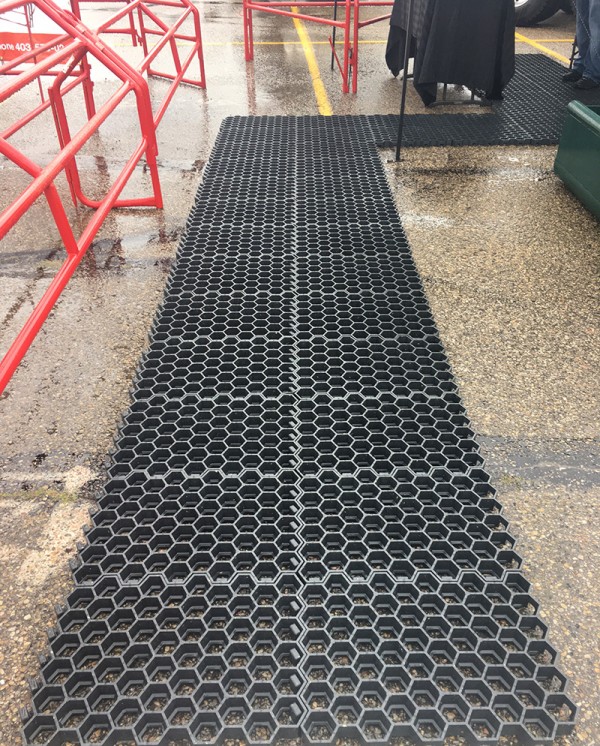
Stable Ground for Everyday Use
Some other events that can benefit from a temporary ground protection solution are trade shows, festivals, fairs, concerts, weddings, funerals, celebrations, anniversaries, reunions, sporting events, crowd control, farm tours, etc.
e-mail Hi-Hog's Sales Department for pricing and shipping information
A brief description of the component footing layers:
- Natural Soil (sub-base): After you remove turf and mud, grade to ensure good drainage.
- Geosynthetic textile: A manufactured fabric that creates a separation and stabilizing layer between the sub base and footing layers. This fabric additionally allows drainage and ground material reinforcement.
- Gravel: The gravel layer provides structure and porosity. Select depth based on arena use as well as the anticipate drainage requirements. While dressage events are good with a base of 4" to 6" in depth, jumping events need a deeper 12” base to provide a firm surface for the horses to generate power.
- Stone Chips: provide a firm level surface to support your paddock slabs. The stone chips (also called screening) should be compacted to near concrete hardness to provide a firm level surface for your footing. The near solid leveling layer combined with the stable Paddock Slab layer will minimize the opportunity for any gravel to find its way into the footing.
- Footing Materials: There are a wide range of materials and recipes for creating footing include ingredients such as sand, wood products, rubber, stone dust, textiles, and topsoil. There are pros and cons for each ingredient. Additionally the recipe and depth of footing you require will vary with the discipline of riding that you are performing as well as the site and personal preferences. The goal is to create a footing that can provide the rider with consistent traction and absorption for the event being performed.
NOTE: The size and shape of the particles being used will affect the ability of the resulting footing to provide traction and absorption. Round particles of a consistent size will offer little traction and will need to be deep to absorb the energy of the horse and rider. Sharp angular particles of a wide range of sizes will offer lots of traction but will compact quickly and not offer sufficient absorption. Sub-angular particles of similar size offer the best option.
Alternate Terms
Paddock Slab, ground reinforcement, footing, permeable, paver, permeable paving, mud, paddock, erosion, grass driveway, grass parking, slope stabilization, soil stabilization, temporary paving, arena footing, bedding, livestock, equine, cattle, turn out, pasture, equestrian, ground, plastic, parking lot, gravel driveway, kennels, horse stall, stall mats, porous paving, storm water, runoff, heat island, mud control, run off, golf courses, overflow parking, temporary parking, roads, lanes, paths, surface stabilization. Water permeable, gravel paver, grass paver, erosion control, rainwater management, water management, storm water management, porous turf, porous asphalt, pervious concrete,


